
The short answer
Before your first triathlon, pick a Sprint or shorter, read the athlete guide for the swim format and the penalty rules, and plan the day backwards from the start time: packet pickup, a transition set-up that opens early, and a morning with nothing left to decide. You need a swimsuit or tri suit, any roadworthy bike, a fastened helmet and a race number. Everything else is optional.
Pick a race that makes the day easier
Choose the distance first: a Sprint (750 m swim, 20 km bike, 5 km run) or a Super Sprint is the sensible start, and the distances page lists every one with miles. Then choose the race for how simple it is to do. Look for a swim you are comfortable with (a pool swim, a calm lake, or a wave start with small groups), a bike course without much traffic, and a venue where parking, transition and the finish are close together.
Find dates, courses and local race-week weather in the race directory. Then work out your own time from your paces with the race time calculator, so the start list and the cutoffs hold no surprises.
What you actually need
Almost every first-timer can race on what they own. The non-negotiables come from the rules: a swimsuit or tri suit you can wear all day, goggles, a helmet that meets your country's standard, a working bike, and running shoes. Organisers usually provide the swim cap, the race numbers and the timing chip. A wetsuit is a water-temperature question, not a buying question: the rules allow one only below set temperatures and require one in very cold water, and the wetsuit temperature calculator shows whether your race water allows one.
A tri suit is the one purchase that earns its price on a first race, because you wear it for all three legs and skip a change of clothes. What to wear covers the cold and rain versions, and the packing list turns all of it into a checklist for your distance.
Check-in, set-up and the rules that cost time
Most races have a packet pickup the day before or the morning of: you collect your race numbers, swim cap and timing chip, and have your bike checked. Transition usually opens early on race morning and closes before the first wave starts. Racking and set-up take longer than people expect, so arrive early rather than rushed. Your bike is racked by number or by wave, your gear sits in a small space beside it, and you walk the route from the swim exit to your bike and from the bike entry to the run exit.
Learn the five rules from the rules page before you go. The ones that bite first-timers: helmet fastened from the moment you take the bike off the rack, mount only after the mount line, no headphones, race number visible, and in most races no drafting (stay 12 m behind the rider ahead, or pass within 25 seconds). Under World Triathlon rules you may not mark your spot with a towel or other object.
The swim start
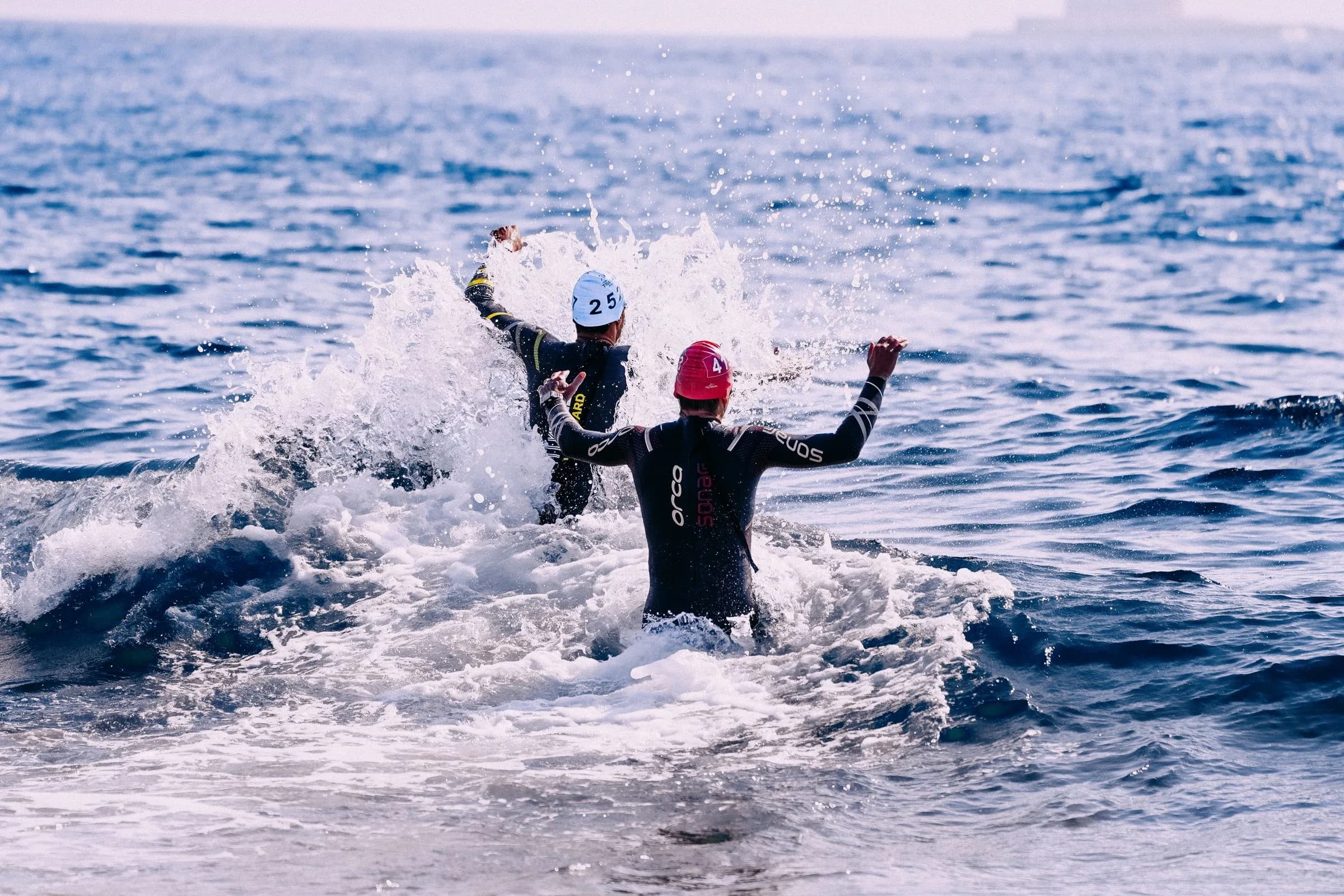
The swim is where most first-timers feel nervous, and the start is the worst of it. Many races send athletes off in waves by age or by estimated time, or one by one in a rolling start, which spreads the field. Start at the side and the back if you are unsure, breathe out underwater, and float on your back to reset if you panic. Safety kayaks and lifeguards are on the course for exactly this. The swim start page goes through each start type, and a practice swim before the race is worth doing if the organiser offers one.
The week before and the morning
Race week is mostly admin: read the athlete guide, check the weather, service the bike, pack the bag, and plan your travel and parking. The race week checklist counts the days back from your date. On the morning, the order that works is to wake early, eat the breakfast you have eaten before, get to transition when it opens, set up, then walk the entry and exit once more. Race morning, hour by hour has the timings.
Practise the parts you cannot rehearse by racing: a bike followed straight by a run (see brick workouts), and a full dress rehearsal of transition with your kit laid out, timed with the transition time calculator. Lay out your gear in the order you will use it.
Sources
- World Triathlon Competition Rules, 13 December 2025 edition (distances, helmet, mount line, transition conduct), as hosted by Triathlon Manitoba
- USA Triathlon Multisport Competition Rules, v.2026.01.01 (race numbers, helmets, drafting, transition)
- Marathon Handbook, average triathlon times by distance
- 2026 IRONMAN Competition Rules (equipment, transition, wetsuit limits)
Published 2026-10-20. Your race's athlete guide always has the final word on its rules and times.
Questions
What do I need for my first triathlon?
A swimsuit or tri suit, goggles, a bike in working order, a helmet that meets your country's standard, running shoes and your race number. Organisers usually supply the swim cap and the timing chip. A wetsuit is only needed if the water is cold enough to allow or require one.
What is the best first triathlon distance?
A Sprint (750 m swim, 20 km bike, 5 km run) or a Super Sprint. Most people finish a Sprint in about an hour and a half to an hour and three quarters.
How early should I get to a triathlon?
Early enough that transition set-up is calm, usually as soon as transition opens, which is often one to two hours before the first start (an estimate; races differ). Check your athlete guide for the exact opening and closing times.
Can I use any bike in a triathlon?
Yes for most Sprint and Olympic races. Road, hybrid and mountain bikes are common among first-timers, as long as the bike is safe, the brakes work and you wear a fastened helmet. Check your race rules for any limits.
What happens if I panic in the swim?
Stop swimming, roll onto your back and breathe until you settle. Most races also let you hold a safety kayak or buoy briefly, but check your race briefing. If you cannot continue, raise an arm and wave for a lifeguard.