
The short answer
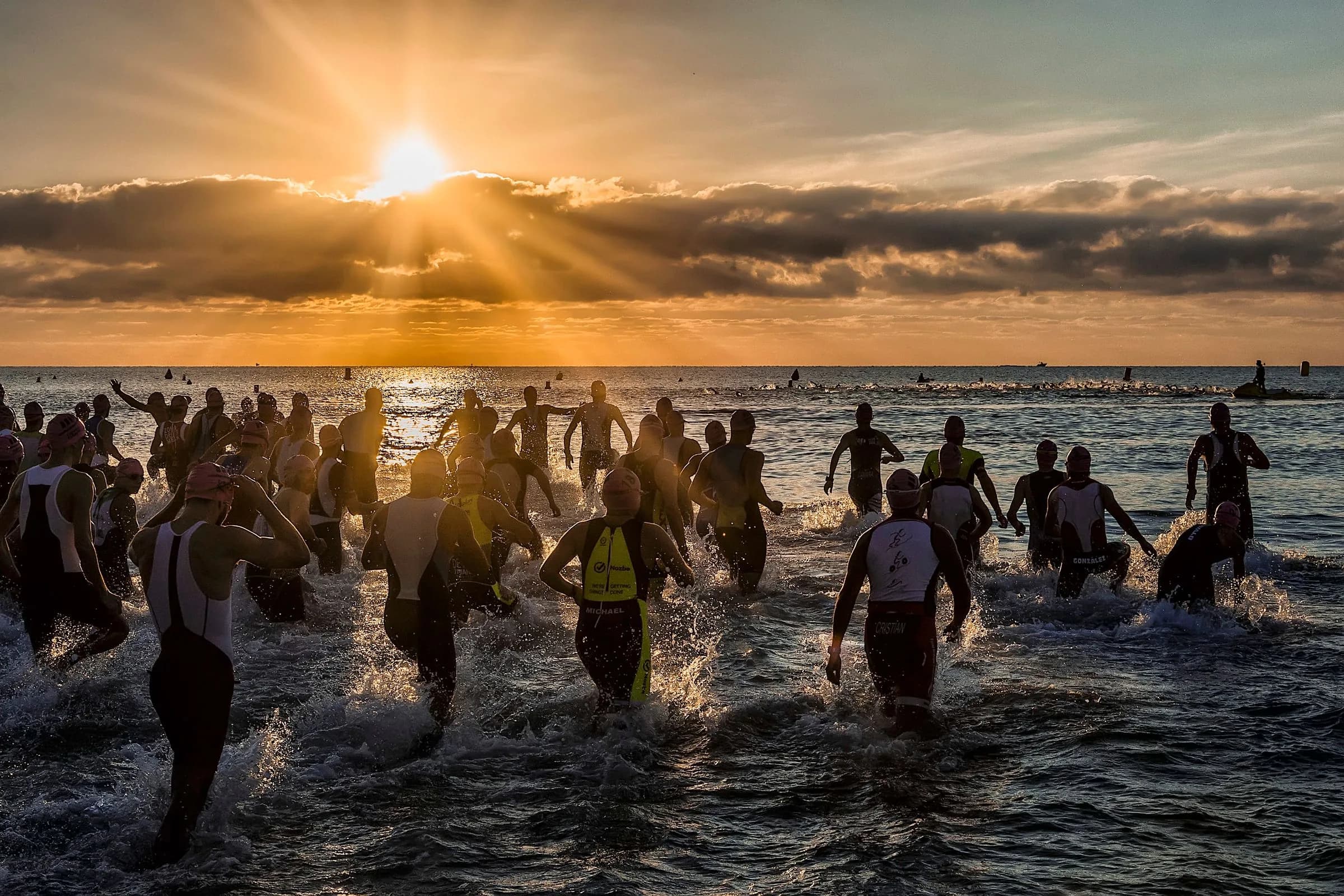
Most triathlon swims start in one of three ways: a mass start where everyone goes at once, wave starts where groups go a few minutes apart, or a rolling start where you enter in a stream by projected swim time. To get through it, seed yourself honestly (slower and wider is fine), start easy for the first 100 metres, sight often and swim around the crowd instead of through it.
The three start types
| Start | How it works | What to do |
|---|---|---|
| Wave | Groups (often by age or gender) go 3 to 5 minutes apart, from the water or the beach | Stand wide, away from the buoy line, and keep your first minute calm |
| Mass | Everyone starts together on a horn or cannon | Line up by ability, start at the back or the outside if nervous |
| Rolling | You self-seed by projected swim time and enter in small groups, with your time starting when you cross the line | Pick the pace sign that matches your honest time, not your hopeful one |
IRONMAN began piloting rolling starts in 2013: athletes seeded themselves by projected swim time under pace signs and entered in staggered groups, which made starts "less hectic than they are at mass starts". Wave size and gaps differ by race, so the gaps above are estimates. Your athlete guide says which you get; the races page is the place to find the guide.
The first 200 metres
This is where most first-timers panic: cold water on your face, a raised heart rate and other swimmers close enough to touch. A few things that work (practical advice, not a study):
- Get in early and put your face in the water for a minute before the start so the cold-water gasp happens before the gun.
- Start wide or at the back. You lose a few seconds and gain a lot of calm.
- Swim the first 100 metres at an easy effort, slower than you think. Go hard and you will be gasping before the first buoy.
- Contact is normal. Keep swimming, keep your elbows relaxed, and do not fight back.
If you panic, roll onto your back or hold a kayak or buoy, take 10 slow breaths and start again. Check your race briefing for what help and resting rules apply, because they differ by race. Practise a few open-water starts in the last weeks, as covered in your first triathlon.
Sighting
In a pool you follow a line; in open water you must find the next buoy yourself. Lift your eyes just enough to see the buoy every 6 to 10 strokes (an estimate, fewer in a straight, calm swim and more in a crowd or chop), then roll back into your stroke. Pick a landmark behind the buoy, such as a tree or a building, because buoys are small and hard to see in waves. Breathe to the side of the course on a clockwise loop so you can see the buoys without extra effort.
Wetsuit rules and water temperature
Under World Triathlon rules for age-groupers, a wetsuit is forbidden at 22 C and above for swims up to 1,500 m, and at 24.6 C and above for longer swims. At 15.9 C and below it is mandatory. The head referee announces the official temperature and wetsuit status one hour before the start. IRONMAN has historically used a limit of 24.5 C (76.1 F) for eligibility for awards, and organisers can change the details, so confirm in your athlete guide.
A wetsuit adds buoyancy and warmth, and most beginners swim noticeably faster in one. Practise getting in and out of it before race day. The wetsuit temperature calculator shows what applies at a given temperature, and the packing list covers the rest of the swim kit. For the morning itself, read race morning, hour by hour.
Sources
- World Triathlon FAQ: age-group wetsuit thresholds (22 C up to 1,500 m, 24.6 C longer, mandatory at 15.9 C or below) and the head referee's announcement 1 hour before the start
- Active.com, 6 FAQs on IRONMAN's new swim starts (self-seeding, pace signs, staggered entry)
- Triathlete, IRONMAN announces changes in swimwear and wetsuit rules (24.5 C / 76.1 F award-eligibility limit, historical)
- Sighting frequency, wave gaps and panic tips are practical estimates, not from a published study
Published 2026-10-20. Your race's athlete guide always has the final word on its rules and times.
Questions
What is a rolling start in triathlon?
A rolling start lets athletes seed themselves by projected swim time and enter the water in a steady stream, with their time starting when they cross the timing line. It is less crowded than a mass start.
How do I avoid getting kicked at the swim start?
Start wide or at the back, wait a few seconds after the horn, and swim around groups instead of through them. A little contact is normal and not a sign that something is wrong.
What should I do if I panic in the swim?
Roll onto your back or hold onto a kayak or buoy, take 10 slow breaths until your heart rate settles, then restart at an easy pace. Practising open-water starts before race day makes it much less likely.
When is a wetsuit allowed in a triathlon?
Under World Triathlon rules for age-groupers, wetsuits are forbidden at 22 C and above for swims up to 1,500 m and at 24.6 C and above for longer swims, and mandatory at 15.9 C and below. Your race's athlete guide confirms its own rules.
How often should I sight in open water?
Roughly every 6 to 10 strokes is a common starting point, and more often in crowds or chop. This is an estimate: adjust it so you stay on the straight line to the buoy.