
The short answer
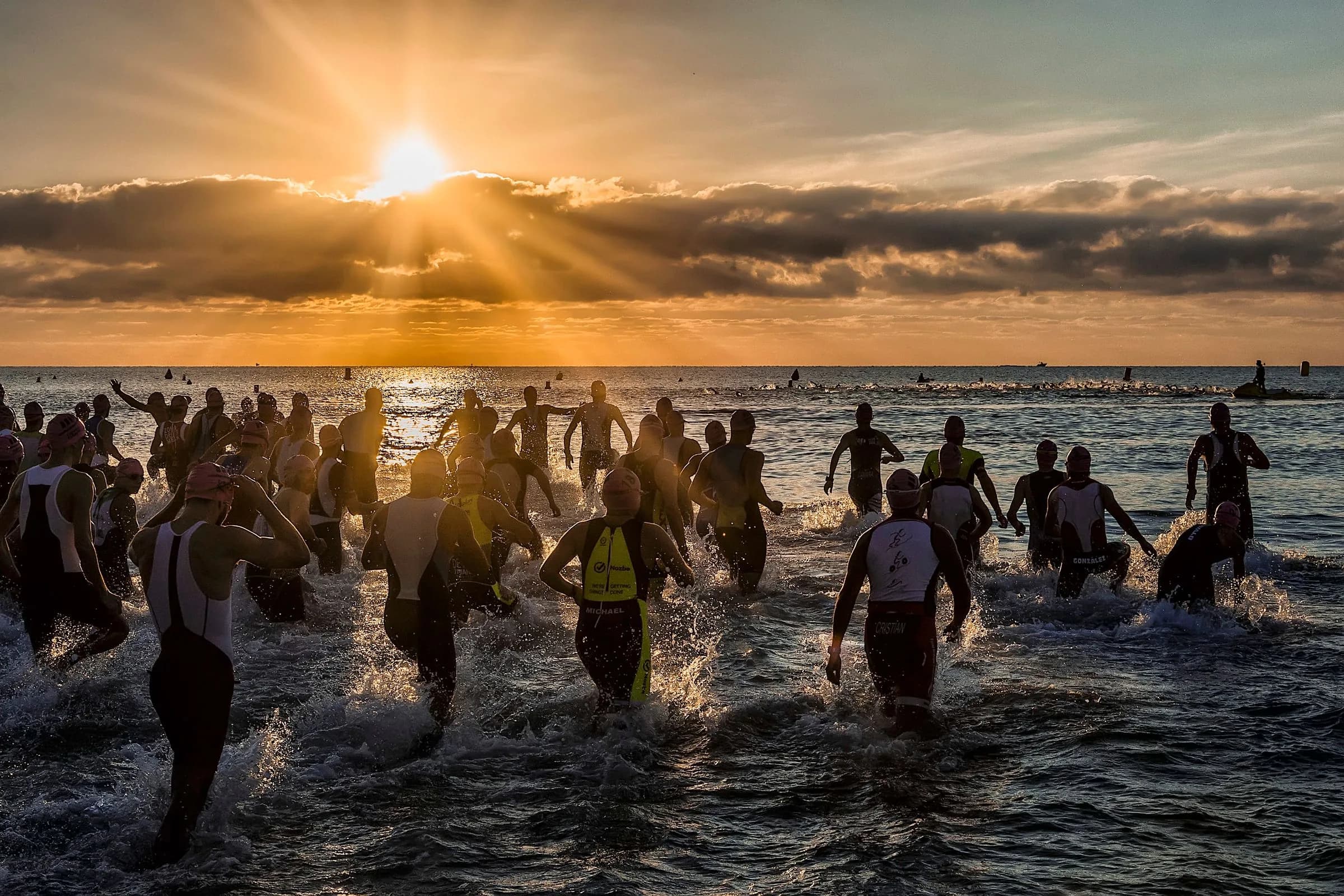
Most triathletes wear one tri suit for the whole race, with a wetsuit over it if the water is cool enough. You add a helmet and shoes for the bike and running shoes for the run. If you have no tri suit, a swimsuit under shorts and a top works for a first race.
The kit, leg by leg
| Leg | What you wear | Beginner shortcut |
|---|---|---|
| Swim | Tri suit, goggles, swim cap (often supplied), wetsuit if allowed | Swimsuit or tri shorts, borrowed or rented wetsuit |
| Bike | Tri suit, helmet, cycling or running shoes, sunglasses | Shorts and top over the swimsuit, any well-fitting helmet |
| Run | Tri suit, running shoes, cap or visor, race number belt | The same shorts and top |
A tri suit has a thin pad, dries quickly and has pockets for gels. It is the one clothing item worth buying first. Try it in a training session to avoid chafing on race day. The packing list has the whole kit.
Wetsuit rules
Whether you may or must wear a wetsuit depends on the water temperature, and the limits differ by organiser. For IRONMAN age group racing (2026 Competition Rules, section 4.02), a wetsuit is legal up to 24.5 C, mandatory below 16 C, and banned above 28.8 C. Between 24.5 C and 28.8 C you can still wear one, but you are not eligible for awards. The 24.5 C and 28.8 C limits date from IRONMAN's 2010 policy announcement. Other bodies use lower thresholds; British Triathlon, for example, recommends wetsuits for most age groupers up to 22 C. Your race briefing states the temperature and the rule that day.
Check likely conditions with the wetsuit temperature calculator. A wetsuit must fit snugly at the neck and shoulders, and thickness is usually capped at 5 mm. The swim start is covered in the swim start guide.
Shoes, socks and the run
Many beginners ride in running shoes and keep them on, which saves a change. If you use cycling shoes, elastic laces on your run shoes save time in T2. Socks are optional in short races; without them, use shoes that do not rub and put powder inside. Stick to what you have trained in. New shoes on race day are a classic first-timer mistake.
You wear your race number on the run, usually on a belt, so it sits at the front. On the bike it goes on your back. Rules for numbers and helmets are in triathlon rules for beginners, and the layout of your spot in T1 and T2 explained.
Cold, heat and rain
- Cold: a neoprene cap and earplugs for the swim, a dry top or gloves for the bike if you can fit them, and warm clothes waiting at the finish.
- Heat: light colours, a cap or visor, sunscreen applied before the start and a plan for drinking more. The sweat rate calculator helps you plan fluid.
- Rain: clear glasses, a thin jacket you can carry on long bikes, and extra care on wet corners and road markings.
Look at the forecast in the week before. The race week checklist covers it, and each race in the race directory shows its likely weather. For long races see Half and Full distance.
Sources
- Triathlete, IRONMAN announces changes in swimwear and wetsuit rules for 2011 (24.5 C and 28.8 C limits)
- IRONMAN Competition Rules 2026, section 4.02 (wetsuits)
- 220 Triathlon, will water temperature affect your race-day swim (British Triathlon guidance)
Published 2026-10-20. Your race's athlete guide always has the final word on its rules and times.
Questions
Do I need a tri suit for my first triathlon?
No. A swimsuit with shorts and a top works for a first race. A tri suit is still worth buying early because it dries fast, has a thin pad and avoids changing between legs.
Can I wear a wetsuit in a triathlon?
Usually yes, if the water is cool enough. For IRONMAN age groupers a wetsuit is legal up to 24.5 C, mandatory below 16 C and banned above 28.8 C. Other organisers use different limits, so check your race rules.
Should I wear a tri suit under my wetsuit?
Yes, most people do. You swim in the tri suit under the wetsuit, take the wetsuit off in T1 and ride and run in the same suit. It removes a change.
What shoes should I wear in a triathlon?
Wear running shoes on the run, and either cycling shoes or the same running shoes on the bike. Use shoes you have trained in, and use elastic laces if you want a faster T2.
What should I wear in a triathlon in cold weather?
Use a neoprene cap and a wetsuit for the swim, then add a dry top or gloves for the bike if you can manage them in transition. Have warm, dry clothes ready at the finish.