
The complete triathlon guide
From the first prep week to the finish line, in race order.
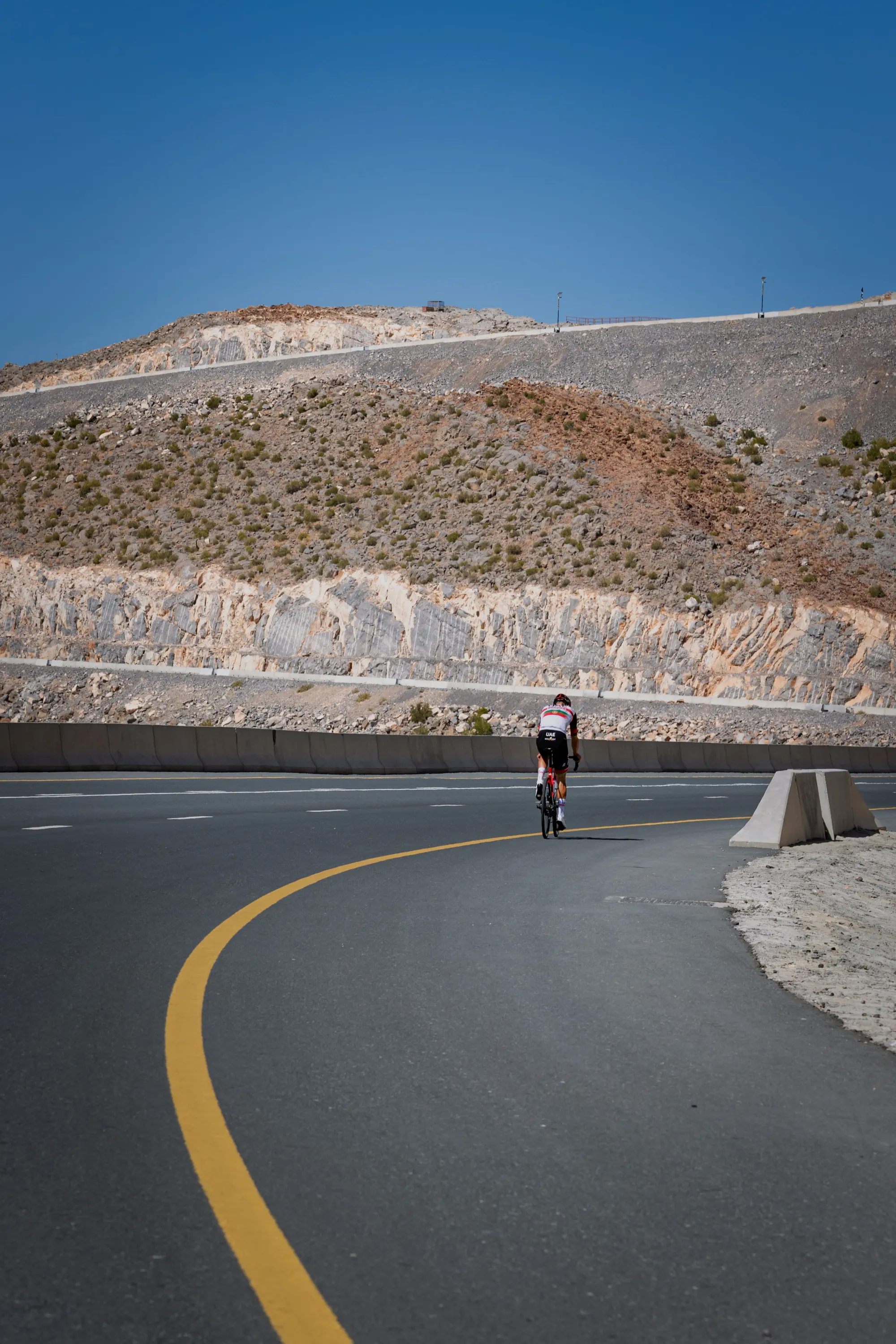
Preparation
Most of the race is decided before you reach the start line.
- Pick a distance you can finish: Sprint is 750 m, 20 km, 5 km. Half is 1.9 km, 90 km, 21.1 km. Full is 3.8 km, 180 km, 42.2 km.
- Read your athlete guide. Cutoffs, wetsuit rules and transition hours are set by your race.
- Practise open water and one or two bricks, a bike straight into a run, in the last weeks.
- Race week: pack by list, check in, rack your bike and sleep.
- Never try new food, shoes or kit on race day.
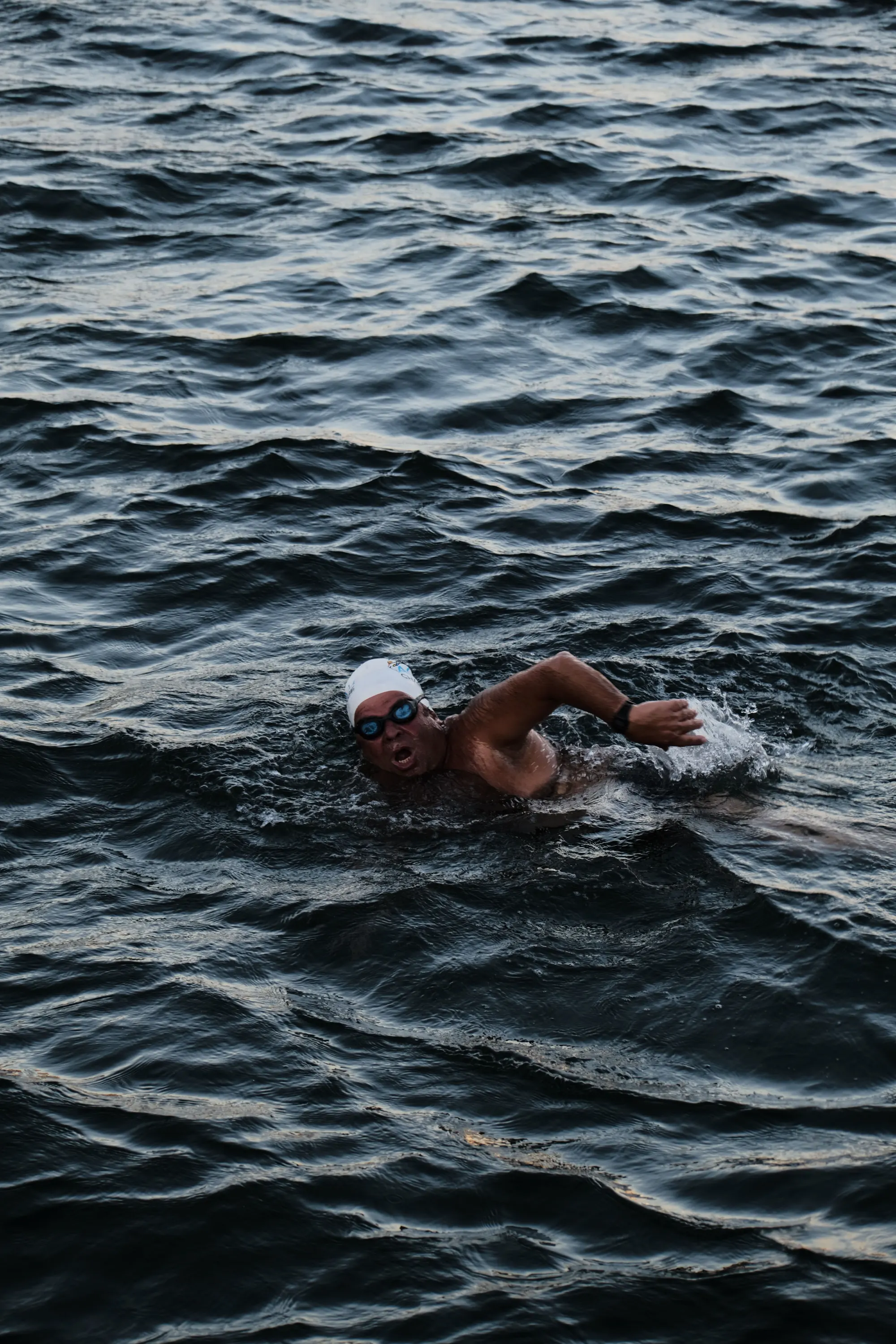
Swim
Start easy and stay out of the crowd.
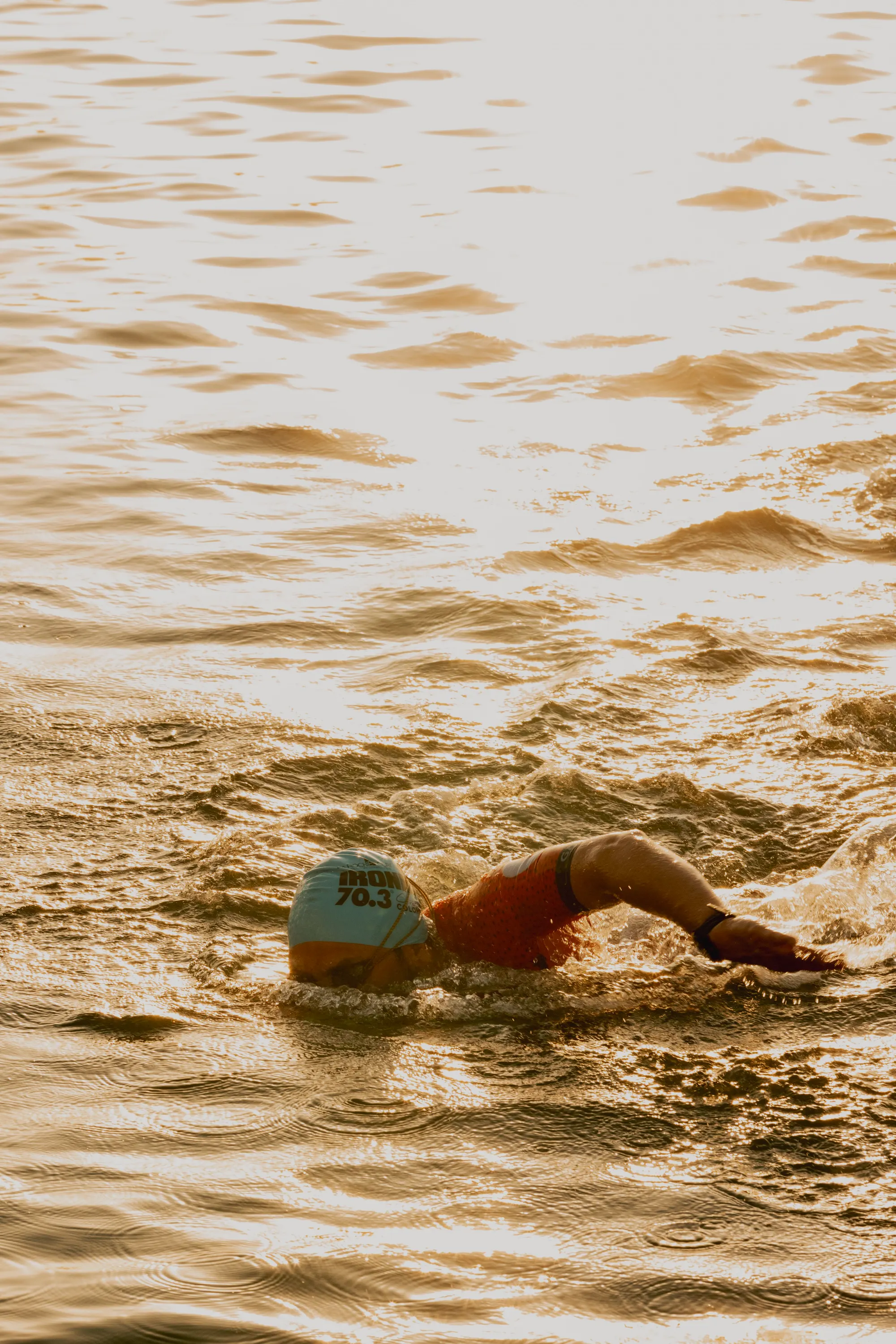
- Starts are mass, wave or rolling. Seed yourself honestly: slower and wider is fine.
- Easy for the first 100 m, then settle. Sight every 6 to 10 strokes (an estimate).
- IRONMAN age group wetsuit: legal up to 24.5 C, mandatory below 16 C, banned above 28.8 C. Other organisers differ.
- Panic: roll onto your back or hold a buoy, 10 slow breaths, restart.
- Typical Full swim cutoff is 2 hours 20 minutes, Half 1 hour 10 minutes.
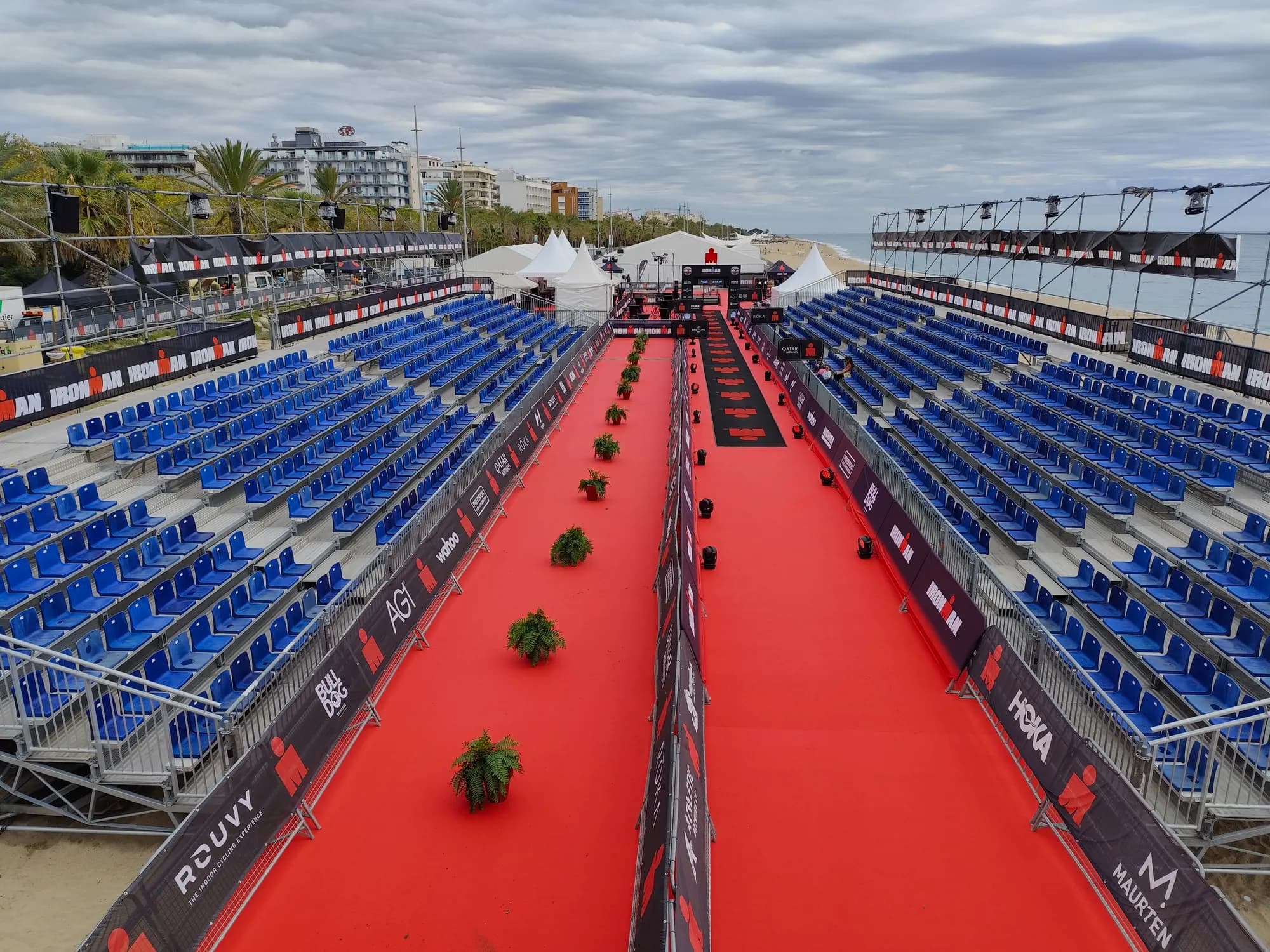
T1
Swim to bike. The clock keeps running.
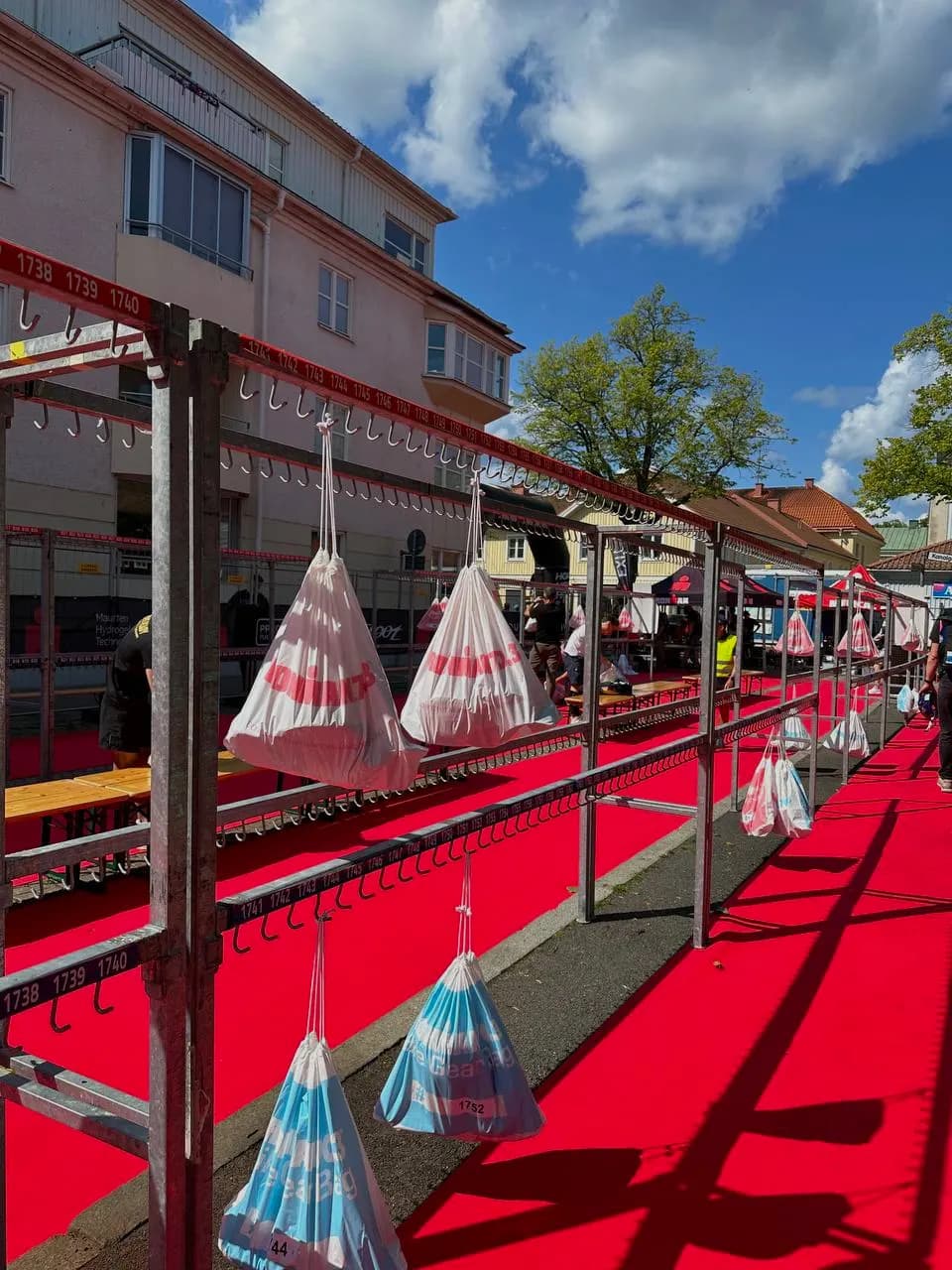
- Walk your route in and out the day before and count rows from a landmark.
- Wetsuit down to the waist while you run from the water, sit only to free your feet.
- Helmet on and fastened before you touch the bike. This is the rule that catches most first-timers.
- Run the bike out and mount only after the mount line.
- At a Full you change in tents with the blue bag for bike gear.
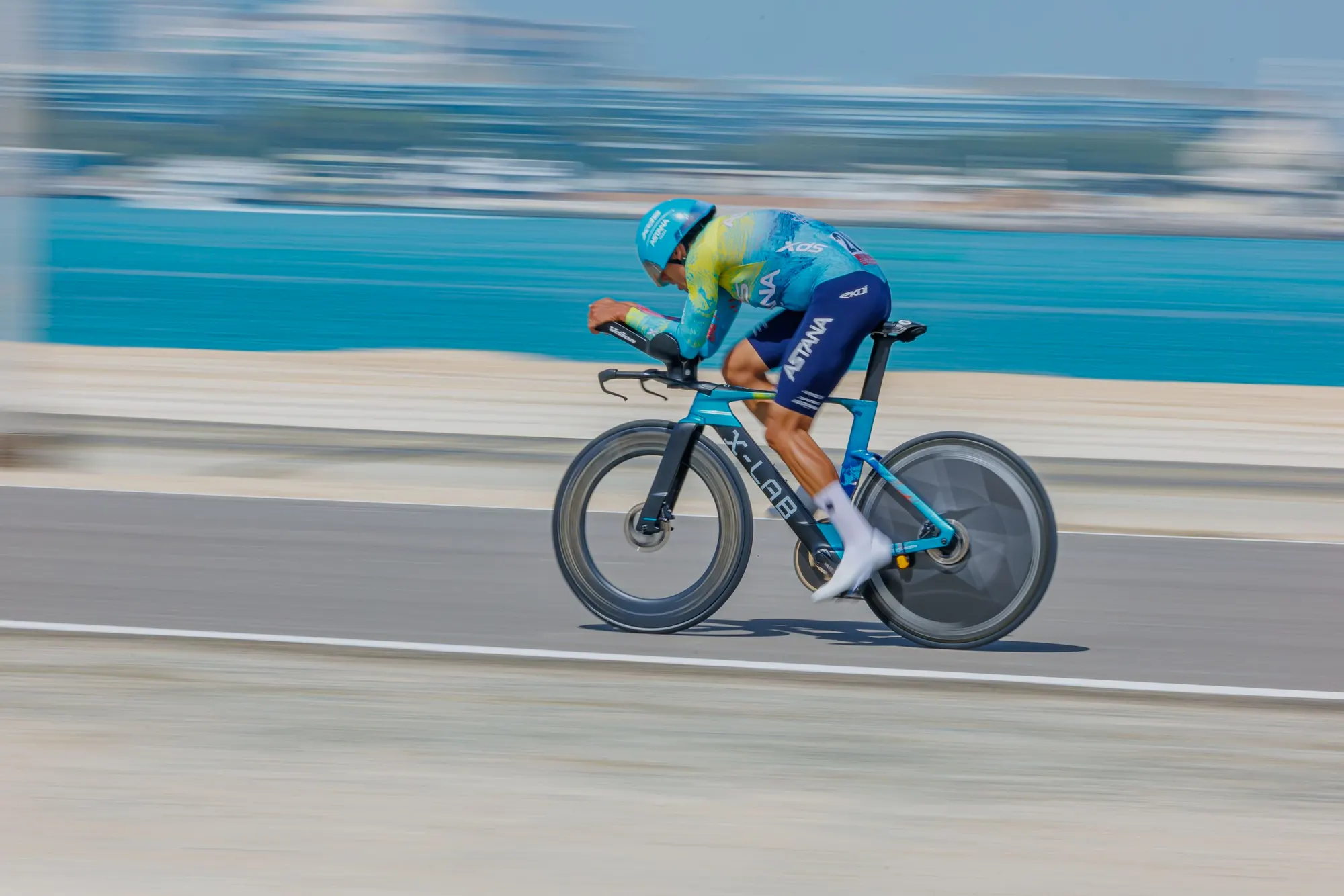
Bike
The longest leg. Ride your own race and eat early.
- The draft zone is 12 m, about six bike lengths. You get 25 seconds to pass.
- No headphones, race number visible, litter only in the marked zones.
- Carbs: about 30 to 60 g per hour in shorter races, 60 to 90 g per hour in a Half or Full.
- Drink to your sweat rate, not to a number from a friend.
- Typical bike cutoff is 10 hours 30 minutes at a Full and 5 hours 30 minutes at a Half.
T2
Bike to run. Short and boring is good.
- Dismount before the dismount line and run your bike to its spot.
- Rack the bike, then take off the helmet, then shoes and race belt.
- At a Full the red bag holds your run gear and you change in the tent.
- Your legs will feel heavy and wobbly. It usually passes in the first 5 to 10 minutes (an estimate).
Run
Start slower than feels right, then earn the finish.
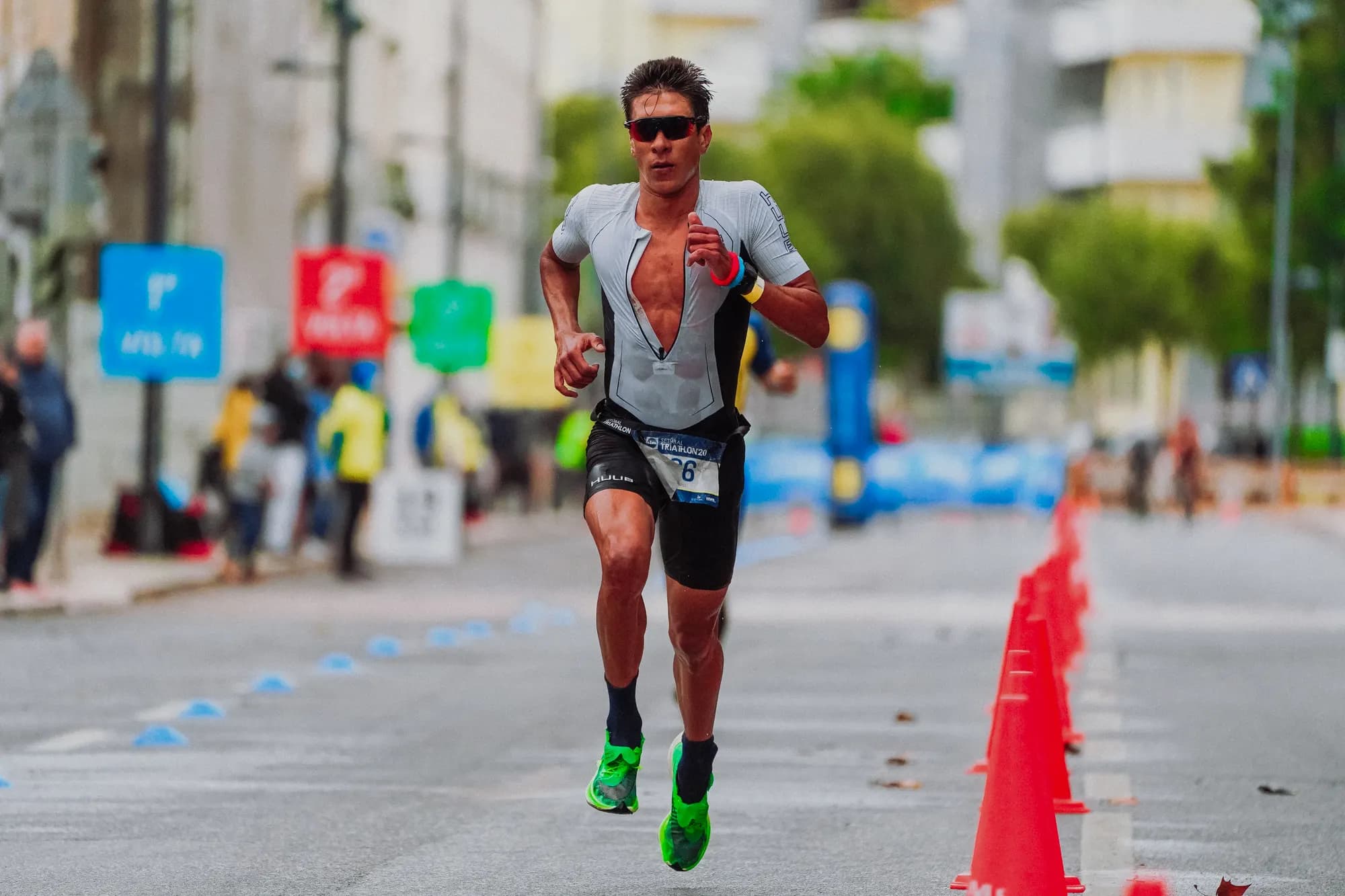
- Hold the first kilometres back. The heavy legs usually pass within minutes.
- Keep fuelling: about 50 to 70 g of carbs per hour on a Full run.
- Walk the aid stations if you need to. Drink, then run again.
- Keep your race number visible on the front.
- The usual overall cutoff is 17 hours at a Full and 8 hours 30 minutes at a Half, from your own start.
After the race
Eat, drink and take it slow.
- Eat and drink soon after the finish line.
- Collect your bags and your bike from transition before it closes.
- Keep walking easily for a bit instead of stopping cold.
- Write down what went well and what you would change while it is fresh.
- Keep the next few days easy. There is no rush to book the next race.