
The short answer
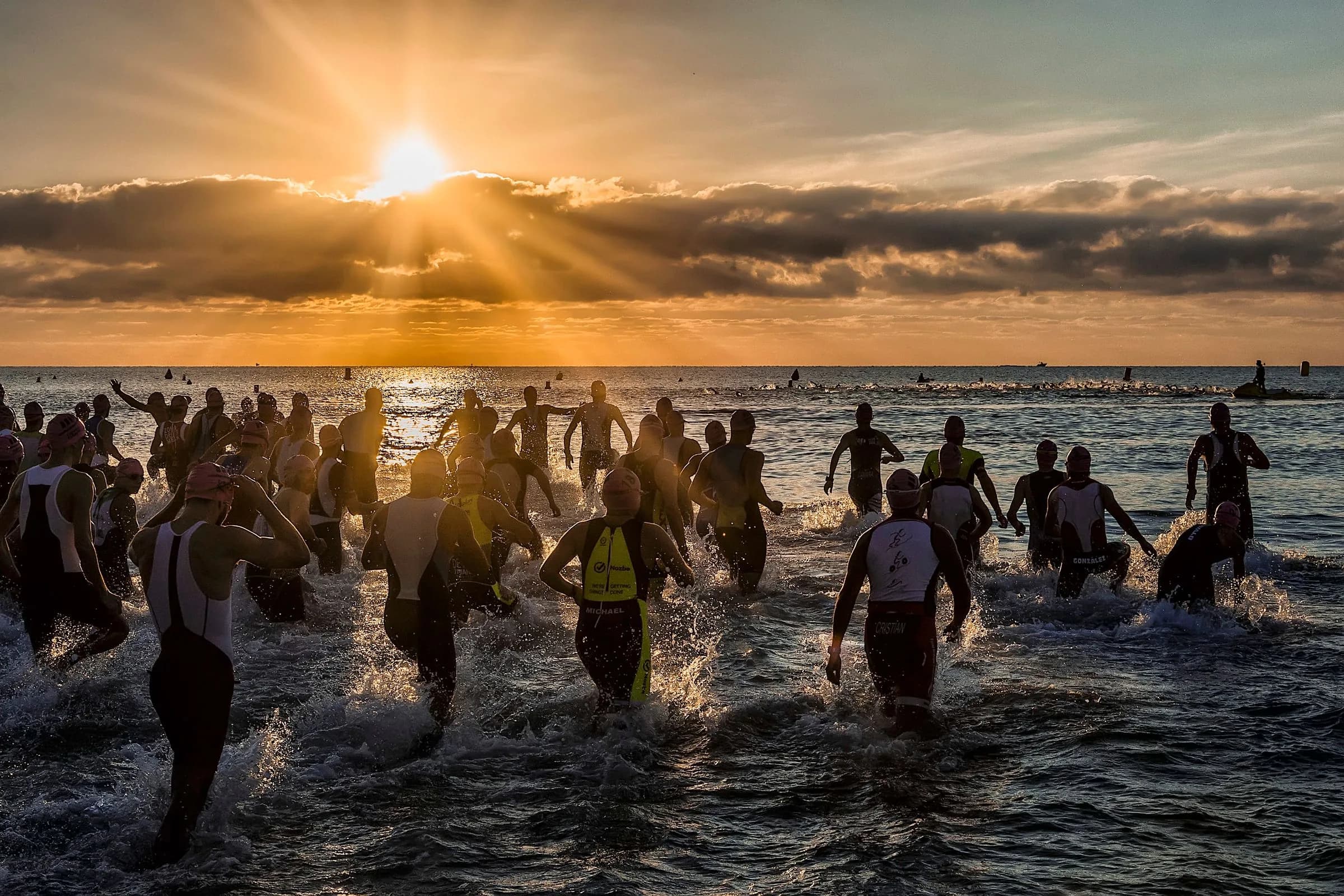
T1 is the change from swim to bike and T2 is the change from bike to run. The clock keeps running in both, so they count as part of your finish time. In a Sprint each takes one to two minutes (an estimate); in a Full they can take ten or more because of change tents and long runs through transition.
T1 and T2, step by step
| T1: swim to bike | T2: bike to run | |
|---|---|---|
| Arrive | Run from the water to your spot | Dismount at the line, run your bike in |
| Gear off | Cap, goggles, wetsuit | Helmet (after racking), bike shoes |
| Gear on | Helmet buckled, shoes, race number | Run shoes, cap or visor, number belt |
| Leave | Run the bike to the mount line | Run out to the course |
Your helmet must be on and fastened before you take the bike off the rack, and it stays on until the bike is racked again. You cannot ride inside transition; you walk or run to the mount line and get on after it. See triathlon rules for beginners for what draws a penalty.
Setting up your transition spot
Racks are usually assigned by race number. Rack the bike the way your race says, with the wheel in your space, and put your gear on a small towel beside it. A good layout is the order you use things: helmet and glasses first, bike shoes next, run shoes on the other side. Note a landmark, such as a tree or the end of your row, because bikes all look alike when you arrive wet and dizzy.
Walk the route from the swim exit to your spot, from your spot to bike out, and from bike in to your spot and run out. The days before are covered in the race week checklist, and what to bring is in the packing list.
The bag system at big races
At a Full, and at some Halfs, your gear is not at your bike. You use bags: a white bag for the morning clothes you drop before the swim, a blue bag for bike gear and a red bag for run gear, hung on numbered pegs. You grab the bag, change in a tent, and leave it behind. Special needs bags may also wait along the bike and run courses. Read the bag system guide, and check your athlete guide for the exact setup. The pages on Half and Full distance cover what changes.
Habits that save minutes
- Practise it: lay your gear out at home and time yourself dressing from wet.
- Put race number and nutrition on the bike or belt before the race, not in transition.
- Use elastic laces or loosen shoes so your feet slide in without a sit-down.
- Pull your wetsuit down to the waist while you run from the water, and sit only to free your feet.
- Keep the kit simple. Every extra item is seconds.
A calm transition matters more than a quick one. Estimate yours with the transition time calculator, and look up your race's layout in the race directory.
Sources
- USA Triathlon competition rules (helmet, mount line, transition conduct)
- Active.com, a beginner's guide to the special needs bag
- IRONMAN athlete guides (bag system and transition layout)
Published 2026-10-20. Your race's athlete guide always has the final word on its rules and times.
Questions
What does T1 mean in a triathlon?
T1 is the first transition, from the swim to the bike. You run from the water to your bike, take off the wetsuit, put on your helmet and shoes, and leave for the bike course.
What does T2 mean in a triathlon?
T2 is the second transition, from the bike to the run. You dismount at the line, rack your bike, take off your helmet, put on your run shoes and head out.
Does transition time count in a triathlon?
Yes. The clock keeps running through both transitions, so they are part of your official finish time.
Do I have to put my helmet on before I take my bike?
Yes. Your helmet must be on and fastened before you remove the bike from the rack, and it must stay fastened until the bike is racked again. Breaking this rule can lead to a penalty.
What are the blue, red and white bags?
At big races like a Full, the white bag holds your morning clothes, the blue bag your bike gear and the red bag your run gear. You change in a tent instead of at your bike. Confirm the setup in your race's athlete guide.